
Operational views
Review work, evidence, exceptions and authorised decisions within a defined operating scope.
Manufacturing
Follow approved production work orders from release through material use, operation completion, quality exceptions and output reconciliation.
12 workspace menus · 5 role profiles · Connected records
Designed for factory production directors and manufacturing operations managers
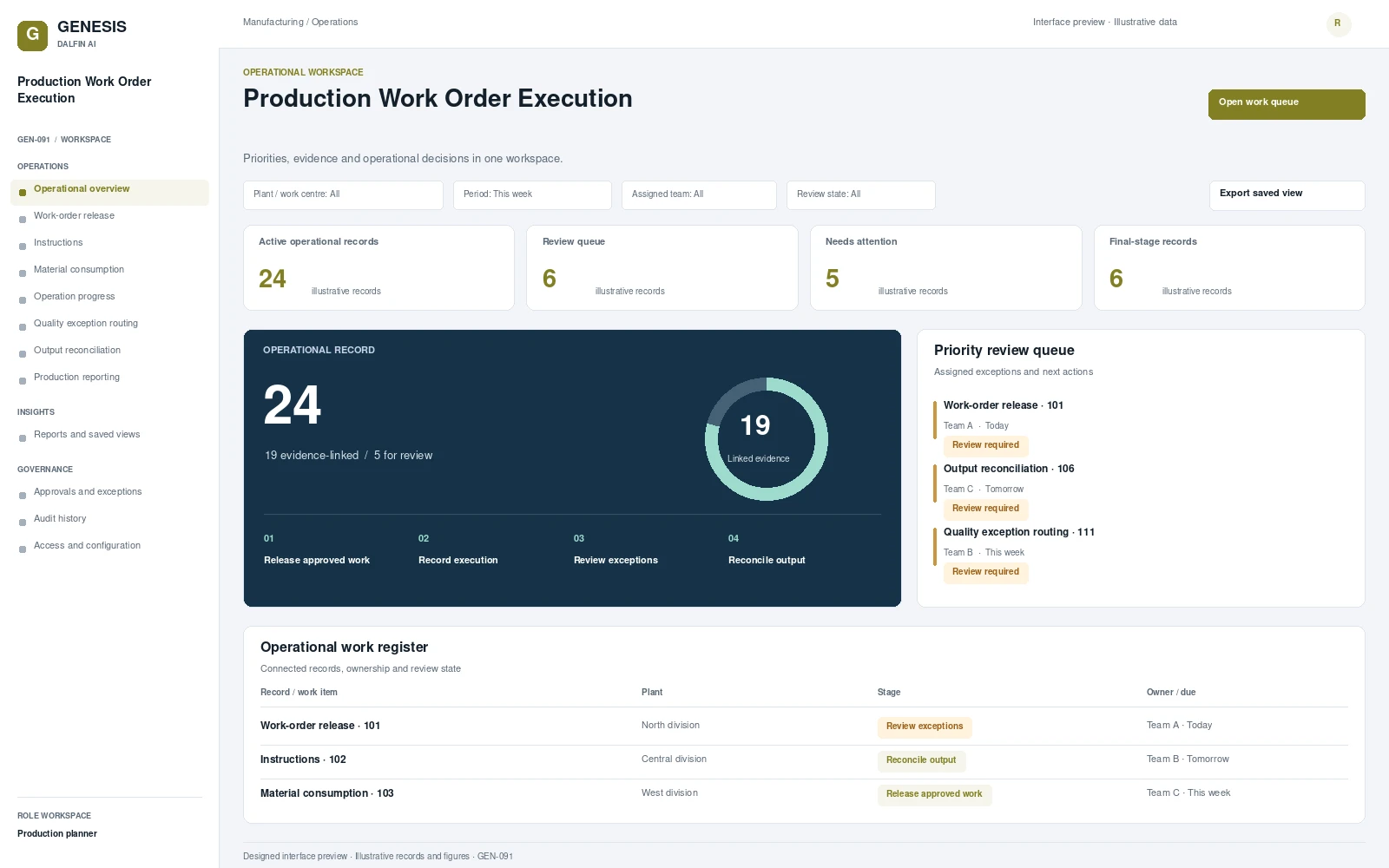
Operational workspace and record review. Select a screen to inspect it in full.
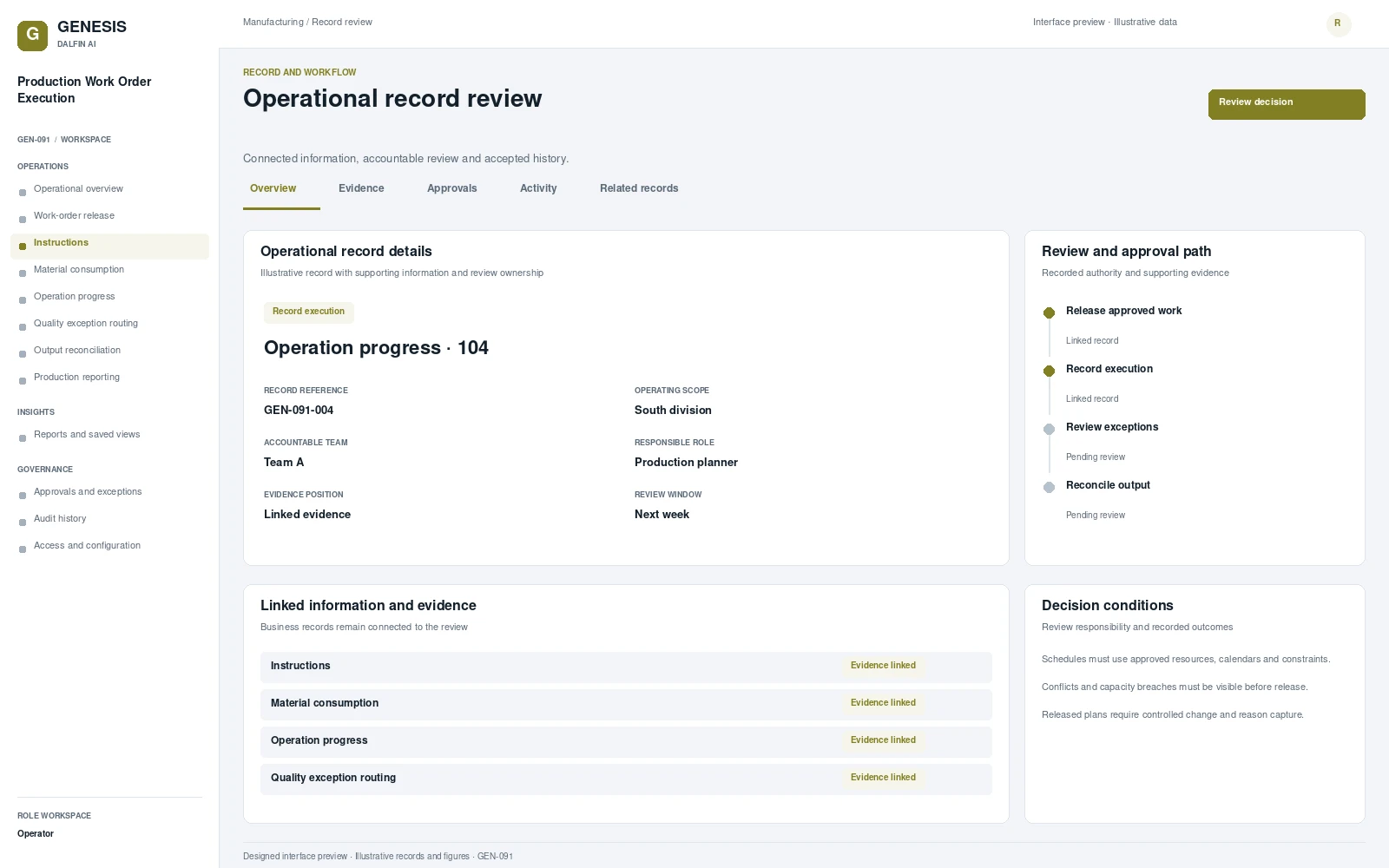
Review work, evidence, exceptions and authorised decisions within a defined operating scope.
Follow approved production work orders from release through material use, operation completion, quality exceptions and output reconciliation. Production status can diverge from the released plan when operators report progress, material use and quality issues in separate systems. The system provides an accountable execution record and a route for exceptions, connecting finished output to the work order and its approved instructions.
From intake to authorised completion, with evidence at each decision.
Release approved work orders and instructions.
Record material consumption and operation completion.
Escalate quality and progress exceptions.
Reconcile finished output and production evidence.
Permissions are configured and tested for the agreed responsibilities.
Interface scope, data mapping and testing are agreed for each engagement.
Use tablet or responsive operator screens to record progress and exceptions at the point of work.
Access approved workflows through the Dalfin mobile app. Device tasks and permissions are confirmed for the deployment.
Summarise recurring production exceptions for an operations reviewer. The system does not include machine control.
AI extensions are scoped around the required data, business outcome and review controls.
Connect requirements, roles, records, workflows and interfaces through the agreed Genesis engineering process.
Review dependency impact and validation requirements. Context Memory supports governed changes and accepted application revisions.
Agree customer cloud or on-premises requirements, device access, implementation acceptance and ongoing engineering support.
An example operating scenario
A work order is released with approved instructions. An operator records material consumption and a quality exception. The authorised reviewer resolves the disposition, remaining operations are completed and the finished quantity is reconciled against the released order.
Roles, approval authority, business rules, records and reporting are configured around your operating model. Scope definition connects the required business outcome to workflows, interfaces and acceptance criteria.
Operators, reviewers and authorised decision makers have defined responsibilities. Approval limits, exception handling and access permissions are agreed with your business owners and tested against the selected workflows.
Interface requirements cover your existing business systems, data ownership, mapping and authentication. Connection design and testing form part of the agreed implementation scope.
Start with a relevant business transaction, then review its approvals, an exception, role permissions and final records. Discuss the integrations, reporting and operating requirements that matter to your organisation.
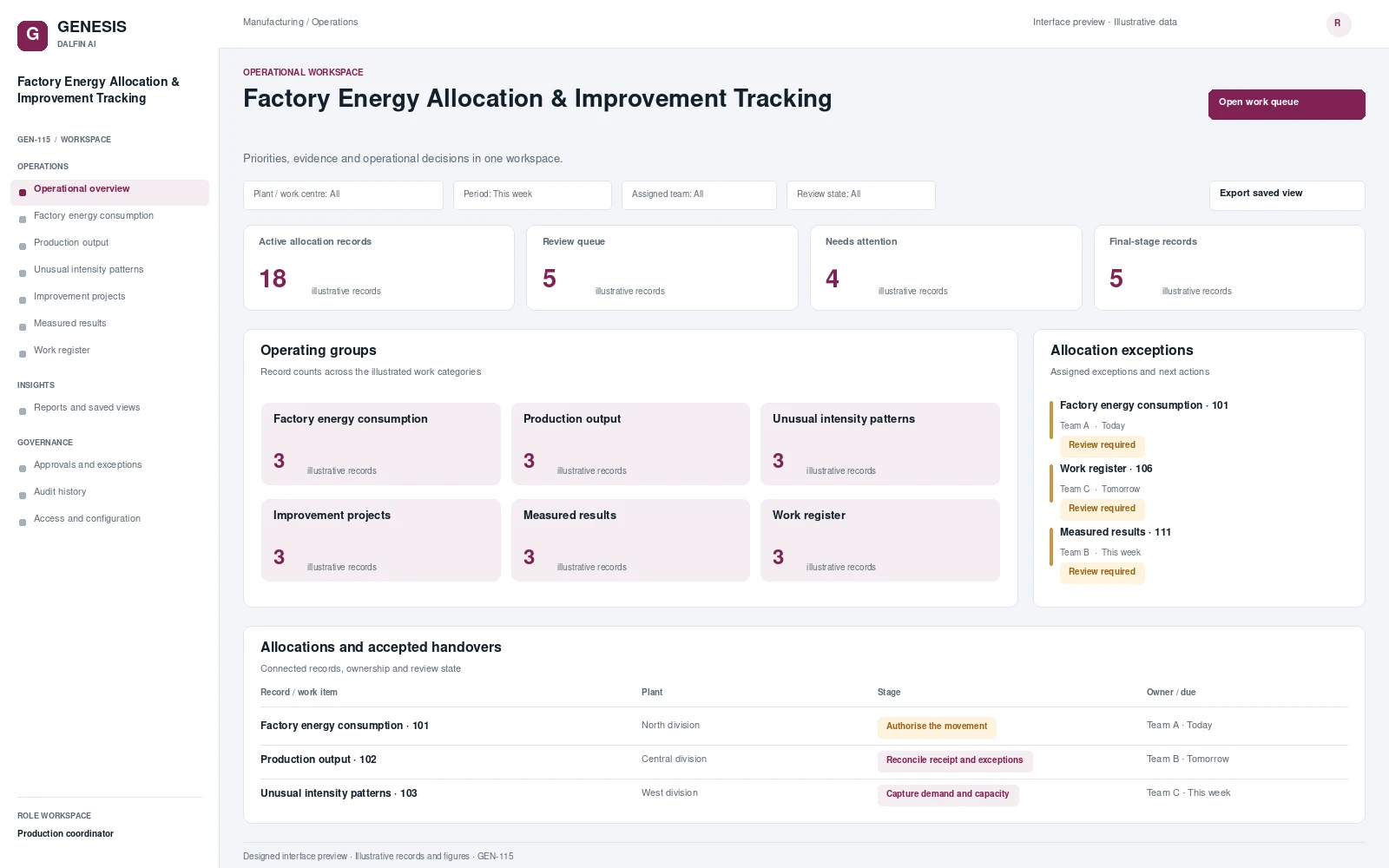 Interface preview
Collects factory energy consumption and production output for allocation to approved products or lines.
Explore system →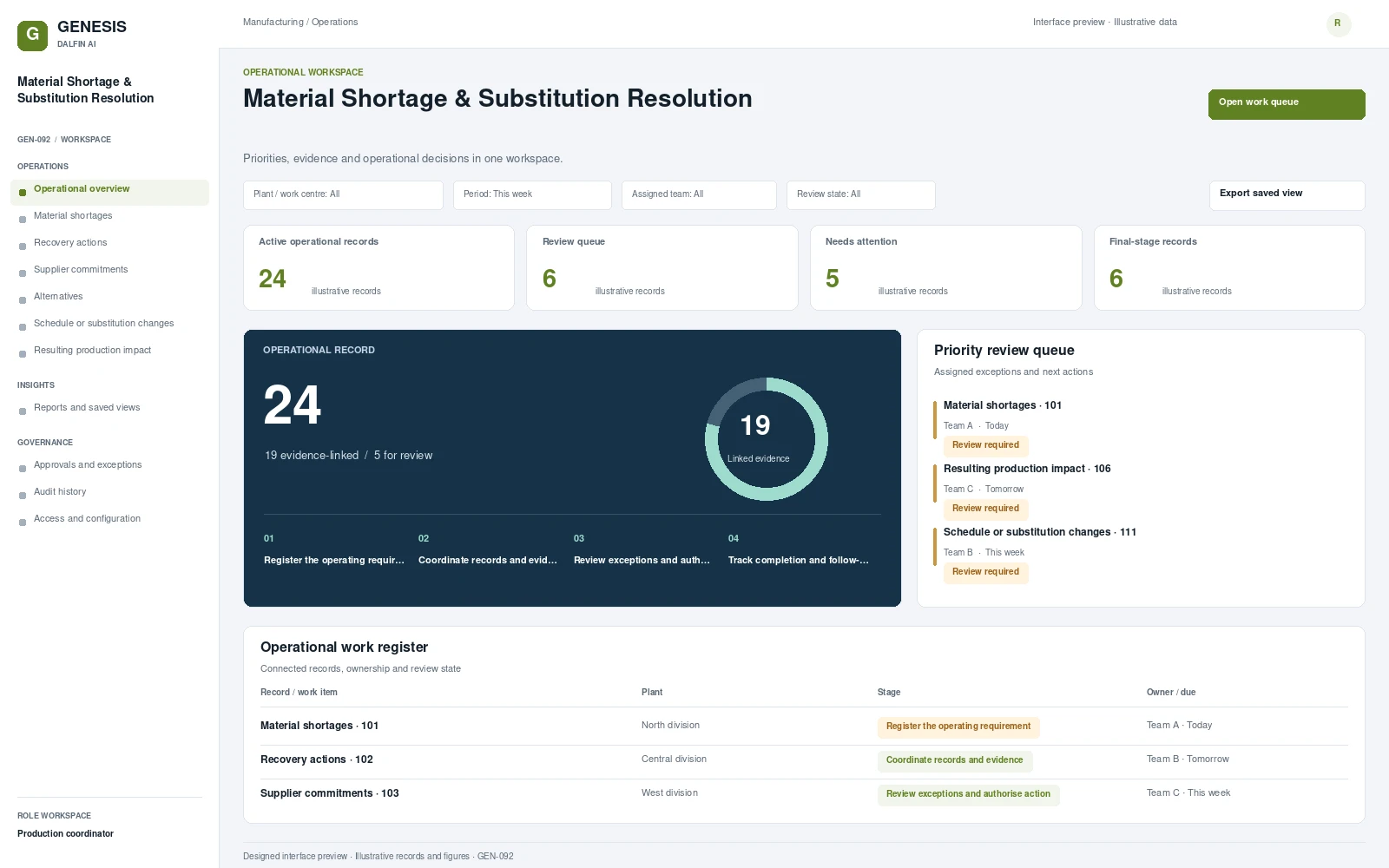 Interface preview
Identifies material shortages against released production demand and coordinates recovery actions.
Explore system →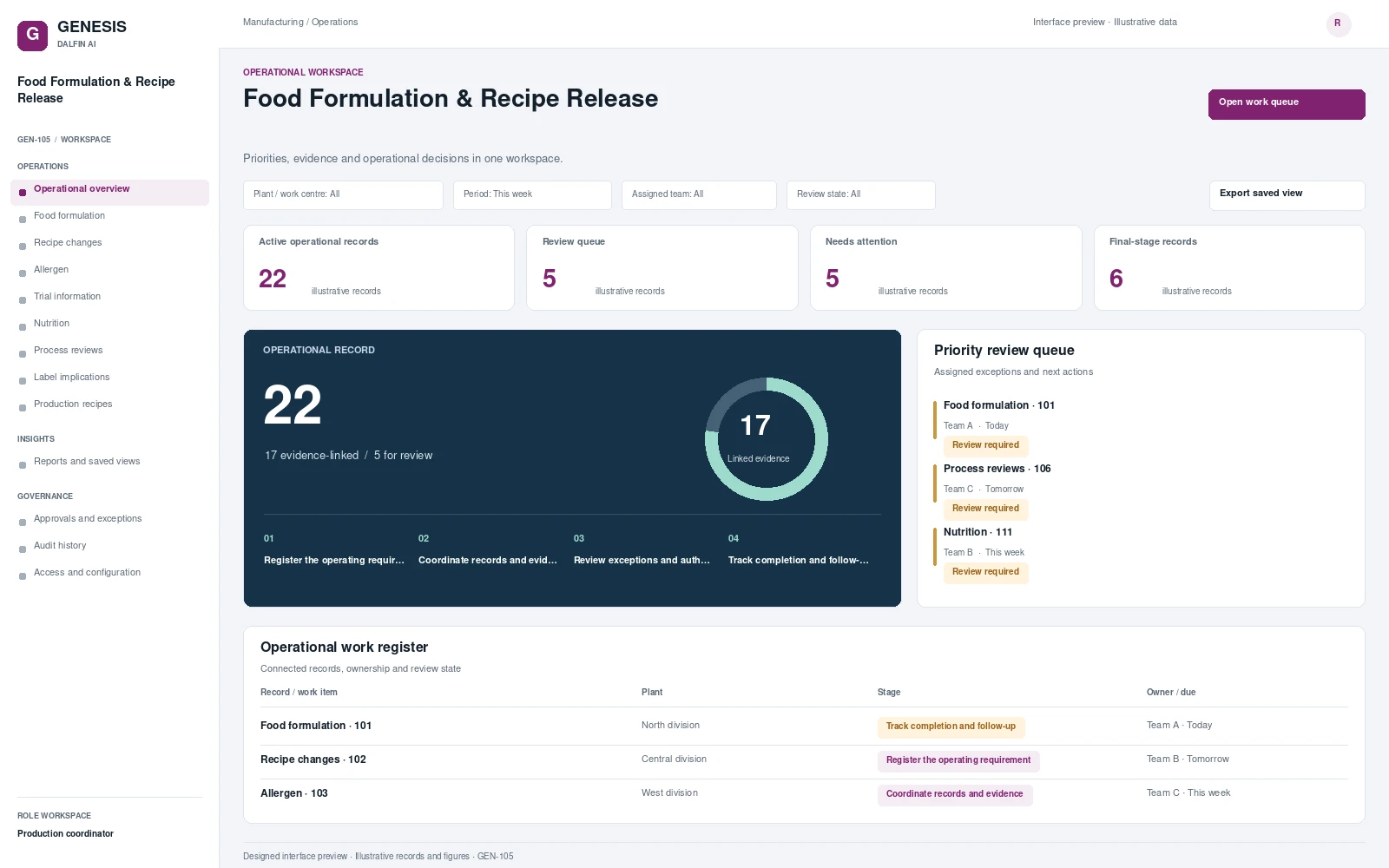 Interface preview
Controls food formulation and recipe changes using ingredient, allergen, cost and trial information.
Explore system →