
Operational views
Review work, evidence, exceptions and authorised decisions within a defined operating scope.
Manufacturing
Connect proposed product or process changes to affected parts, tooling, stock, revision approval and location-level implementation.
12 workspace menus · 5 role profiles · Connected records
Designed for manufacturing engineering and configuration management directors
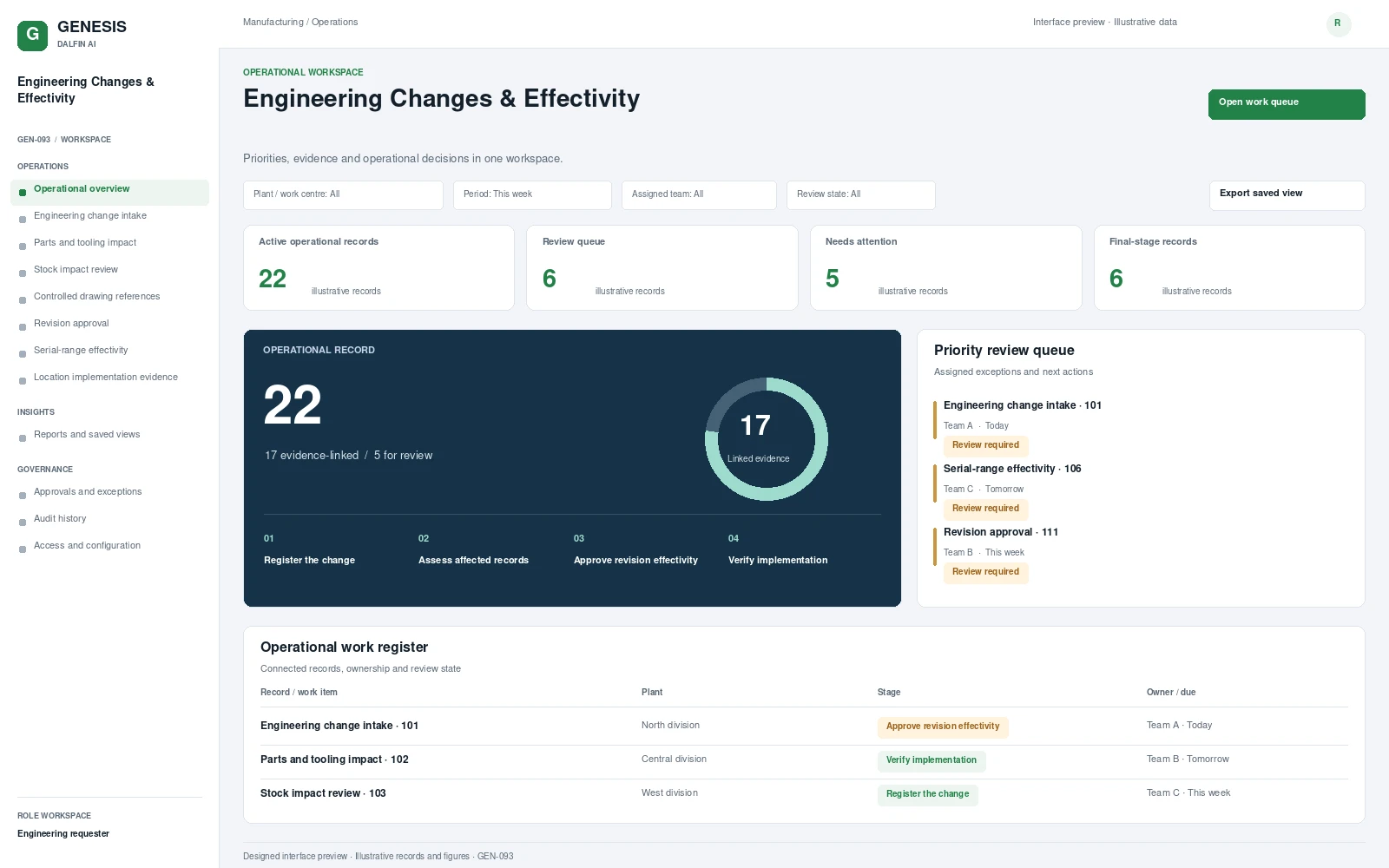
Operational workspace and record review. Select a screen to inspect it in full.
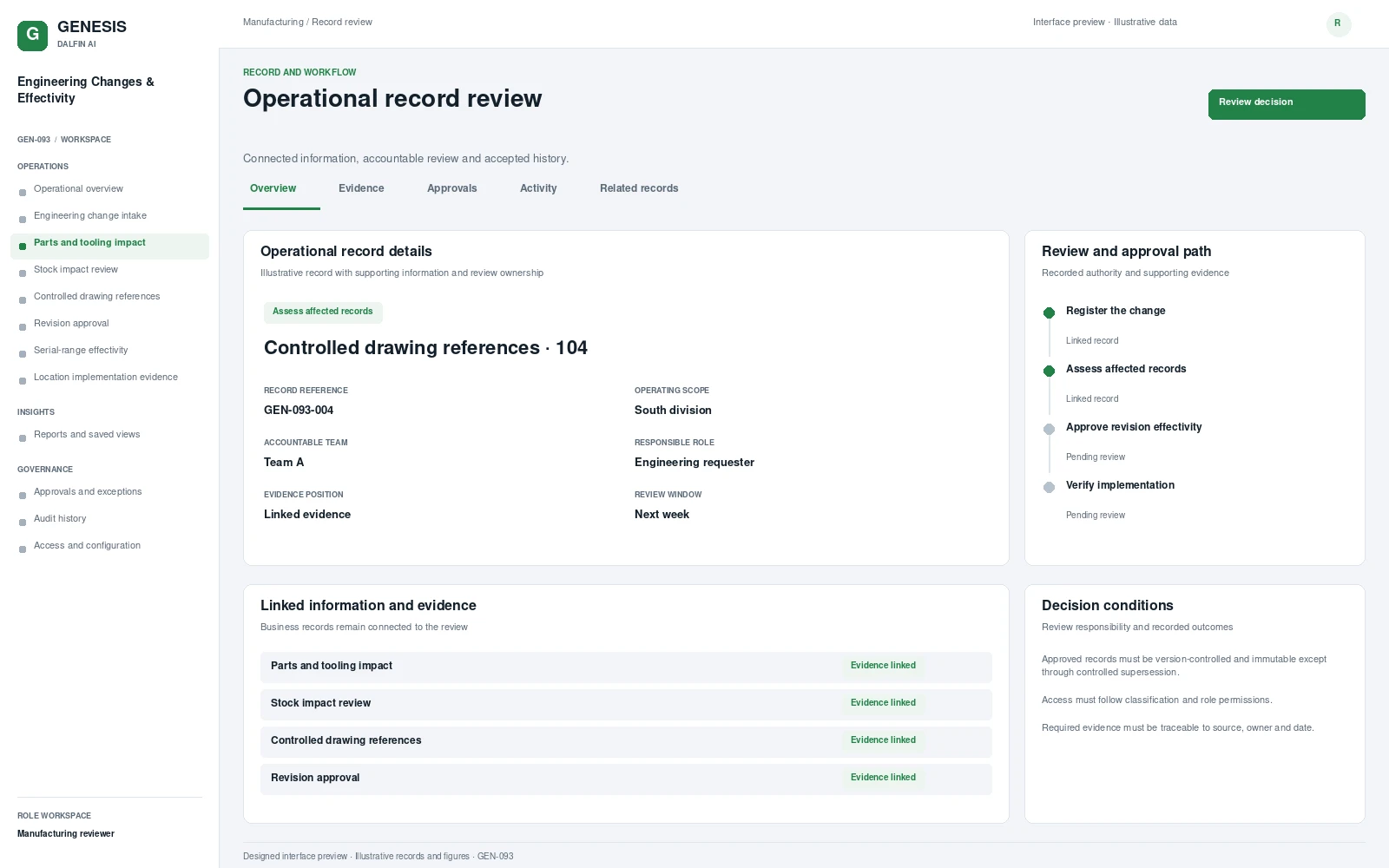
Review work, evidence, exceptions and authorised decisions within a defined operating scope.
Connect proposed product or process changes to affected parts, tooling, stock, revision approval and location-level implementation. A drawing revision can affect production before its effective boundary and dependent records are agreed. The system connects impact assessment and engineering approval to serial or revision effectivity, allowing locations to confirm implementation against the same authorised change record.
From intake to authorised completion, with evidence at each decision.
Register proposed product or process change.
Assess affected parts, tooling and stock.
Approve revisions and effective serial ranges.
Verify implementation across production locations.
Permissions are configured and tested for the agreed responsibilities.
Interface scope, data mapping and testing are agreed for each engagement.
View approved implementation tasks and capture location evidence through responsive views.
Access approved workflows through the Dalfin mobile app. Device tasks and permissions are confirmed for the deployment.
Summarise supplied impact evidence for an engineering reviewer. Technical release authority remains human controlled.
AI extensions are scoped around the required data, business outcome and review controls.
Connect requirements, roles, records, workflows and interfaces through the agreed Genesis engineering process.
Review dependency impact and validation requirements. Context Memory supports governed changes and accepted application revisions.
Agree customer cloud or on-premises requirements, device access, implementation acceptance and ongoing engineering support.
An example operating scenario
An engineering change affects a part and existing stock. The configuration reviewer identifies an unresolved effectivity boundary, the authorised engineer approves the corrected revision and serial range, and each production location records implementation evidence.
Roles, approval authority, business rules, records and reporting are configured around your operating model. Scope definition connects the required business outcome to workflows, interfaces and acceptance criteria.
Operators, reviewers and authorised decision makers have defined responsibilities. Approval limits, exception handling and access permissions are agreed with your business owners and tested against the selected workflows.
Interface requirements cover your existing business systems, data ownership, mapping and authentication. Connection design and testing form part of the agreed implementation scope.
Start with a relevant business transaction, then review its approvals, an exception, role permissions and final records. Discuss the integrations, reporting and operating requirements that matter to your organisation.
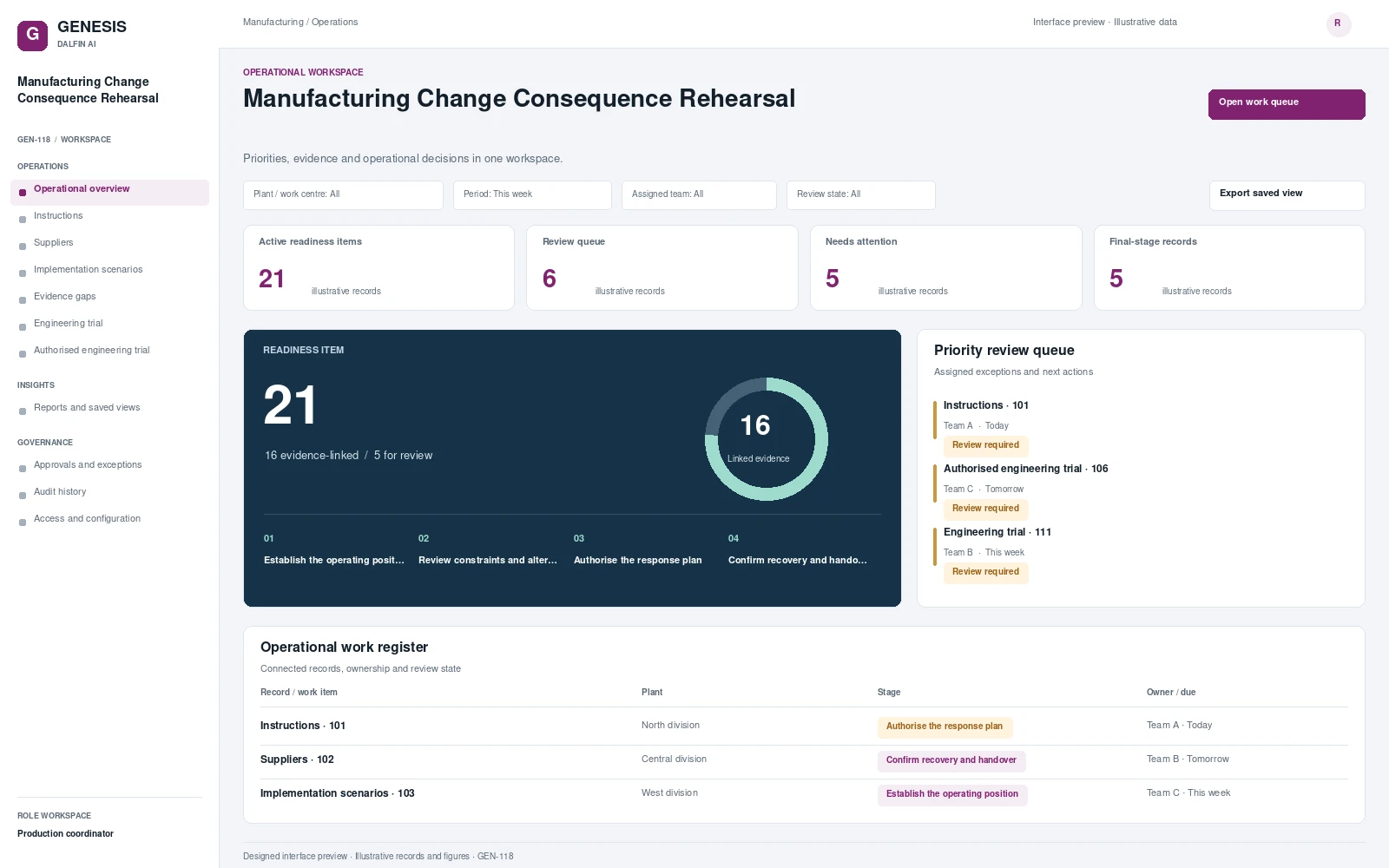 Interface preview
Supports review of proposed manufacturing changes by tracing affected materials, instructions, tests and suppliers.
Explore system →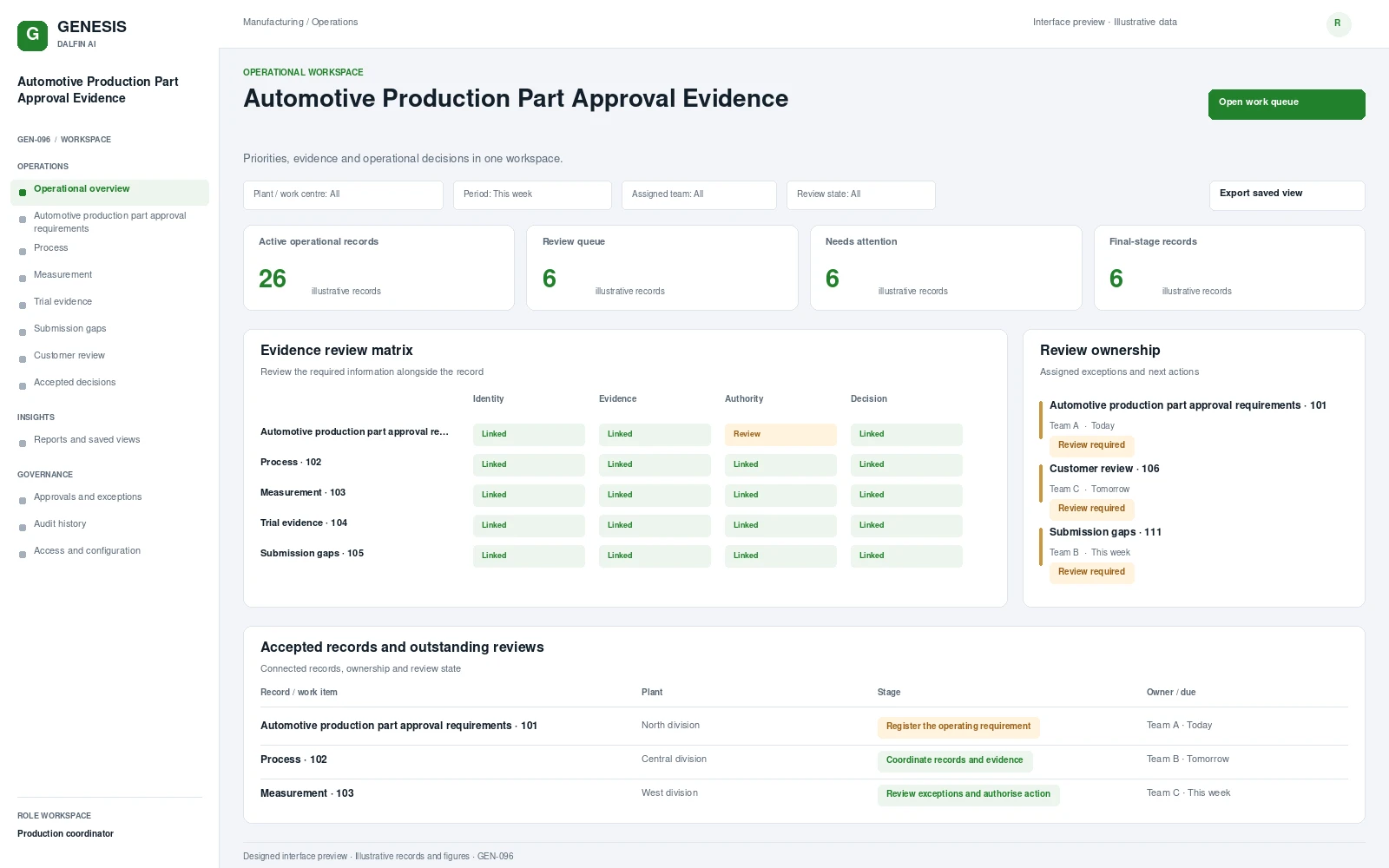 Interface preview
Organises automotive production part approval requirements and supporting process, measurement and trial evidence.
Explore system →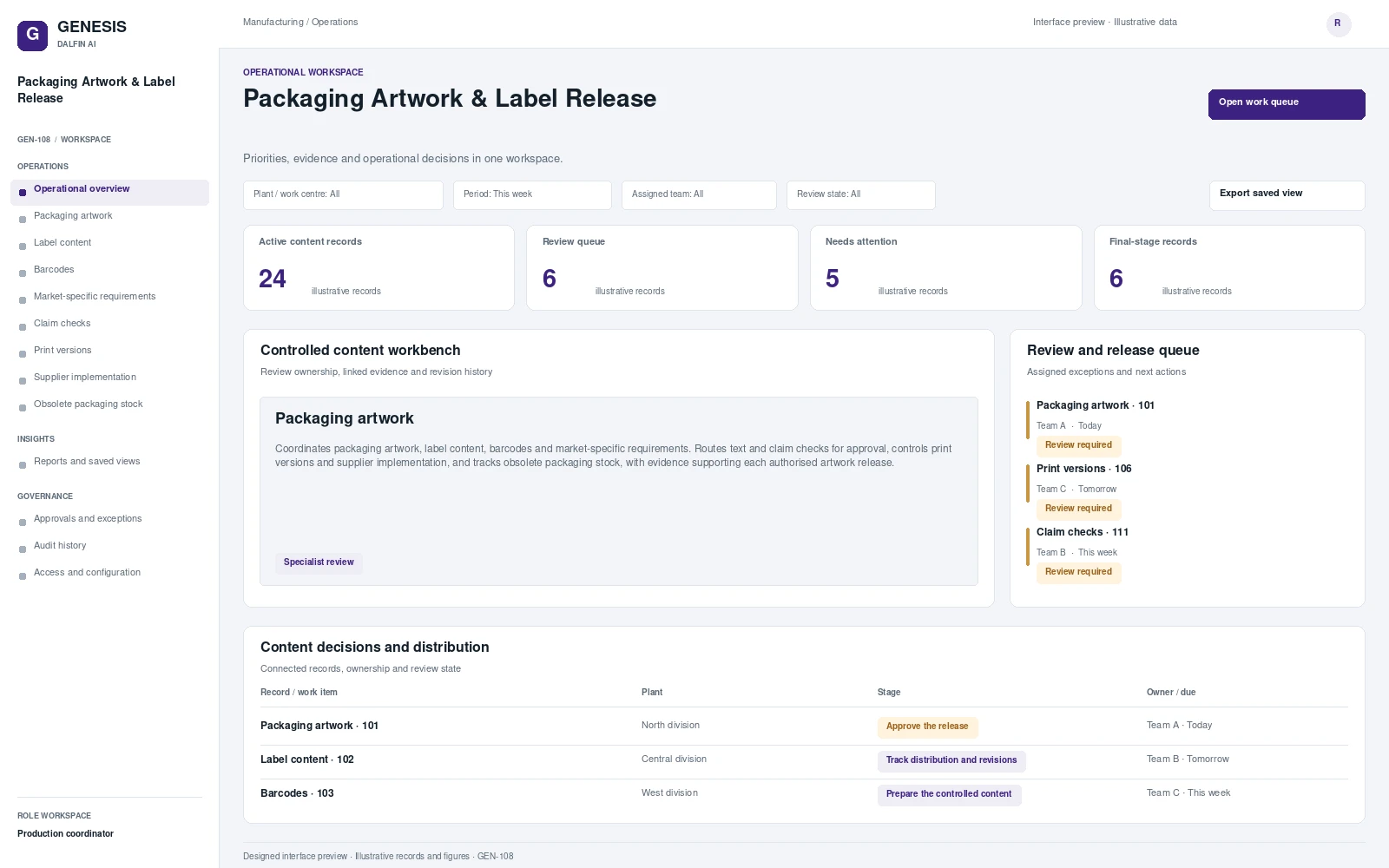 Interface preview
Coordinates packaging artwork, label content, barcodes and market-specific requirements.
Explore system →