
Operational views
Review work, evidence, exceptions and authorised decisions within a defined operating scope.
Water, waste & environment
Coordinate approved sampling schedules, laboratory custody records, specialist exception review and response evidence.
12 workspace menus · 5 role profiles · Connected records
Designed for water service operators and drinking water assurance teams
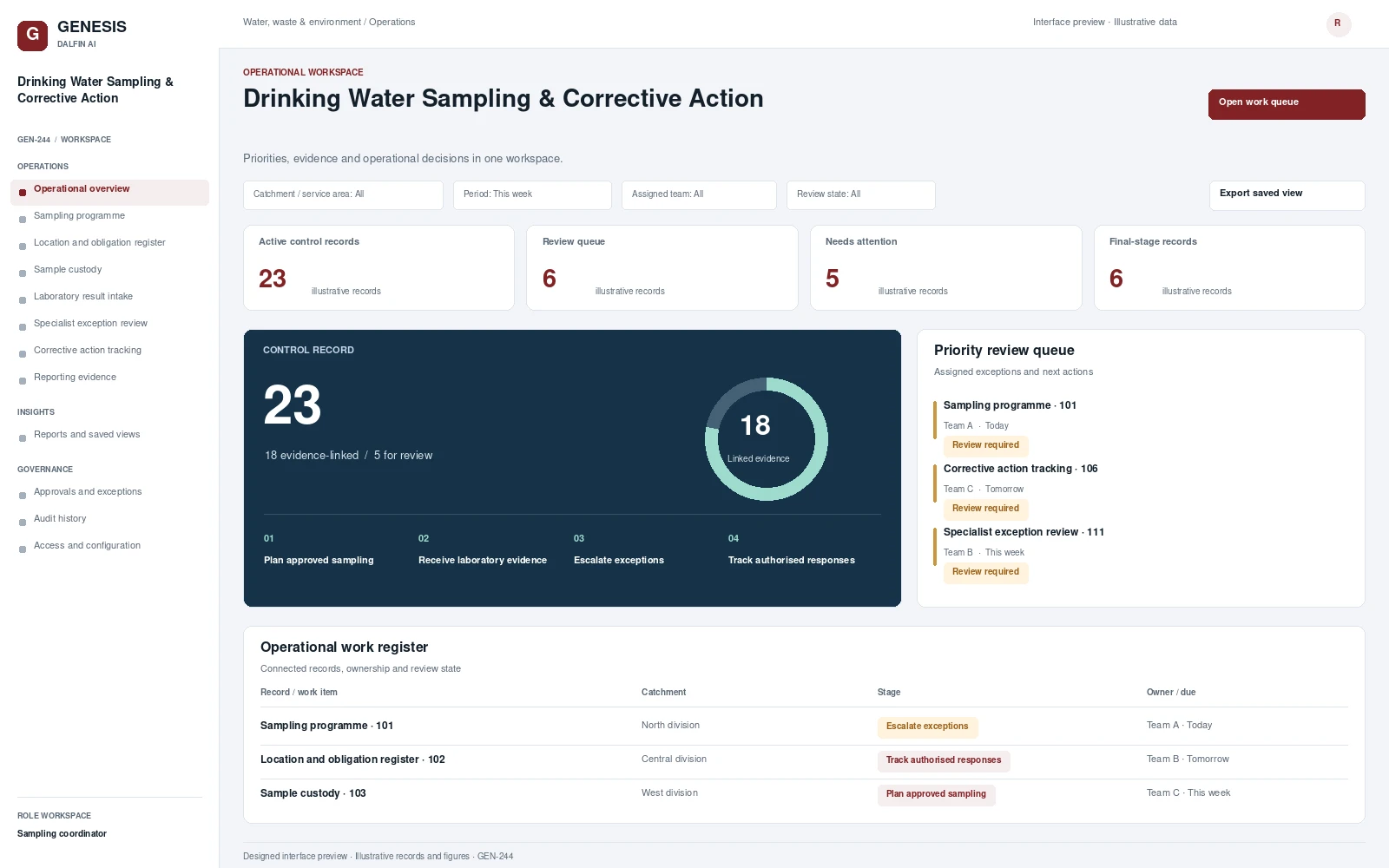
Operational workspace and record review. Select a screen to inspect it in full.
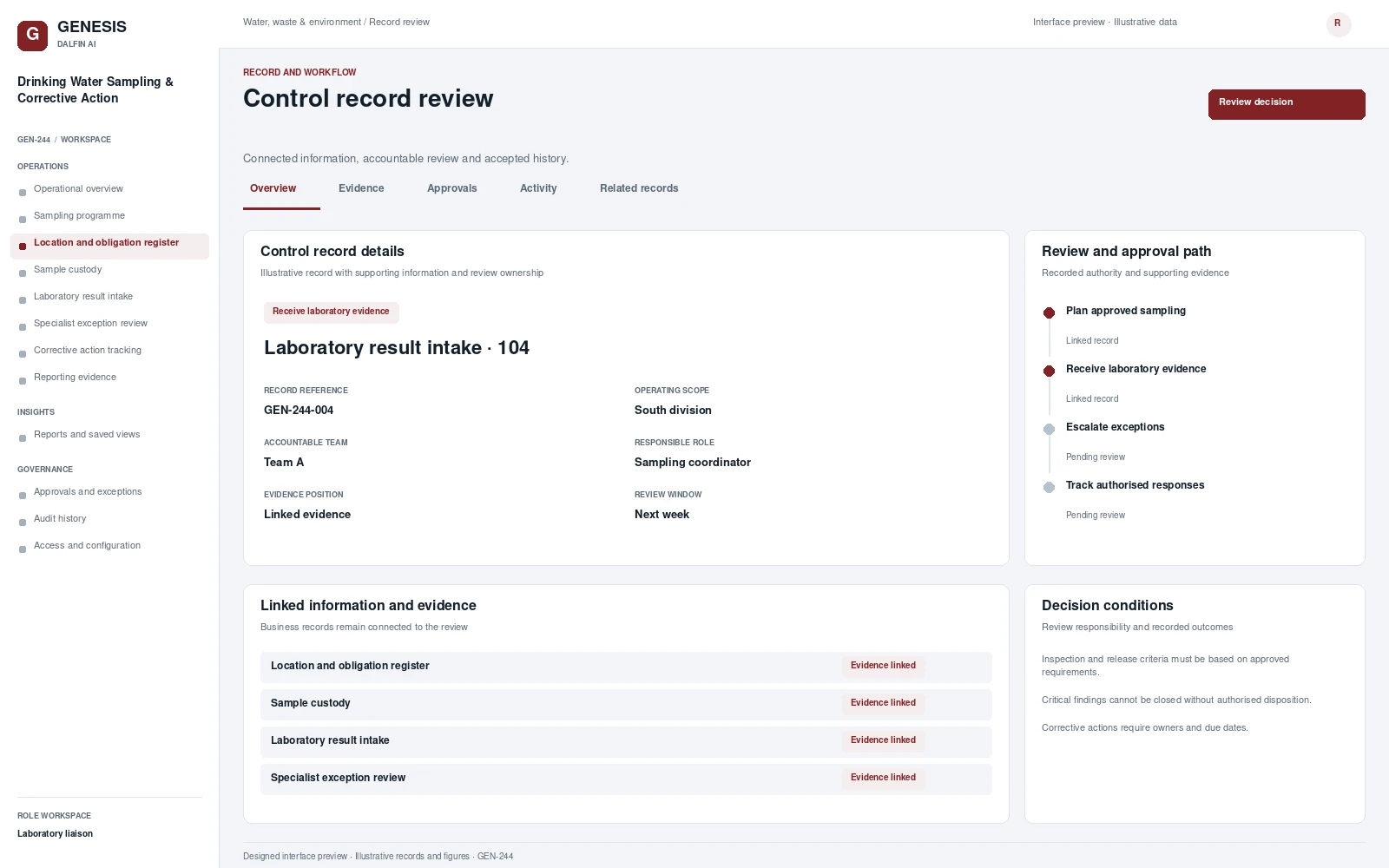
Review work, evidence, exceptions and authorised decisions within a defined operating scope.
Coordinate approved sampling schedules, laboratory custody records, specialist exception review and response evidence. Sampling assurance depends on more than recording a laboratory value. Teams must connect the location, sampling obligation, custody evidence and authorised response. The system tracks that chain, making missed samples and outstanding corrective actions visible to responsible water specialists.
From intake to authorised completion, with evidence at each decision.
Schedule approved sampling locations and obligations.
Receive laboratory results with custody evidence.
Escalate exceptions to authorised water specialists.
Track approved responses and regulatory reporting completion.
Permissions are configured and tested for the agreed responsibilities.
Interface scope, data mapping and testing are agreed for each engagement.
Record sampling and custody evidence on field devices. Water-safety interpretations remain with qualified specialists.
Access approved workflows through the Dalfin mobile app. Device tasks and permissions are confirmed for the deployment.
Prepare trend summaries for specialist review after approved data-quality and interpretation rules are established.
AI extensions are scoped around the required data, business outcome and review controls.
Connect requirements, roles, records, workflows and interfaces through the agreed Genesis engineering process.
Review dependency impact and validation requirements. Context Memory supports governed changes and accepted application revisions.
Agree customer cloud or on-premises requirements, device access, implementation acceptance and ongoing engineering support.
An example operating scenario
A sampling schedule creates a task at an approved location. A custody discrepancy is resolved before the result is reviewed. An authorised specialist records the response to an exception and verifies the corrective-action evidence before reporting closeout.
Roles, approval authority, business rules, records and reporting are configured around your operating model. Scope definition connects the required business outcome to workflows, interfaces and acceptance criteria.
Operators, reviewers and authorised decision makers have defined responsibilities. Approval limits, exception handling and access permissions are agreed with your business owners and tested against the selected workflows.
Interface requirements cover your existing business systems, data ownership, mapping and authentication. Connection design and testing form part of the agreed implementation scope.
Start with a relevant business transaction, then review its approvals, an exception, role permissions and final records. Discuss the integrations, reporting and operating requirements that matter to your organisation.
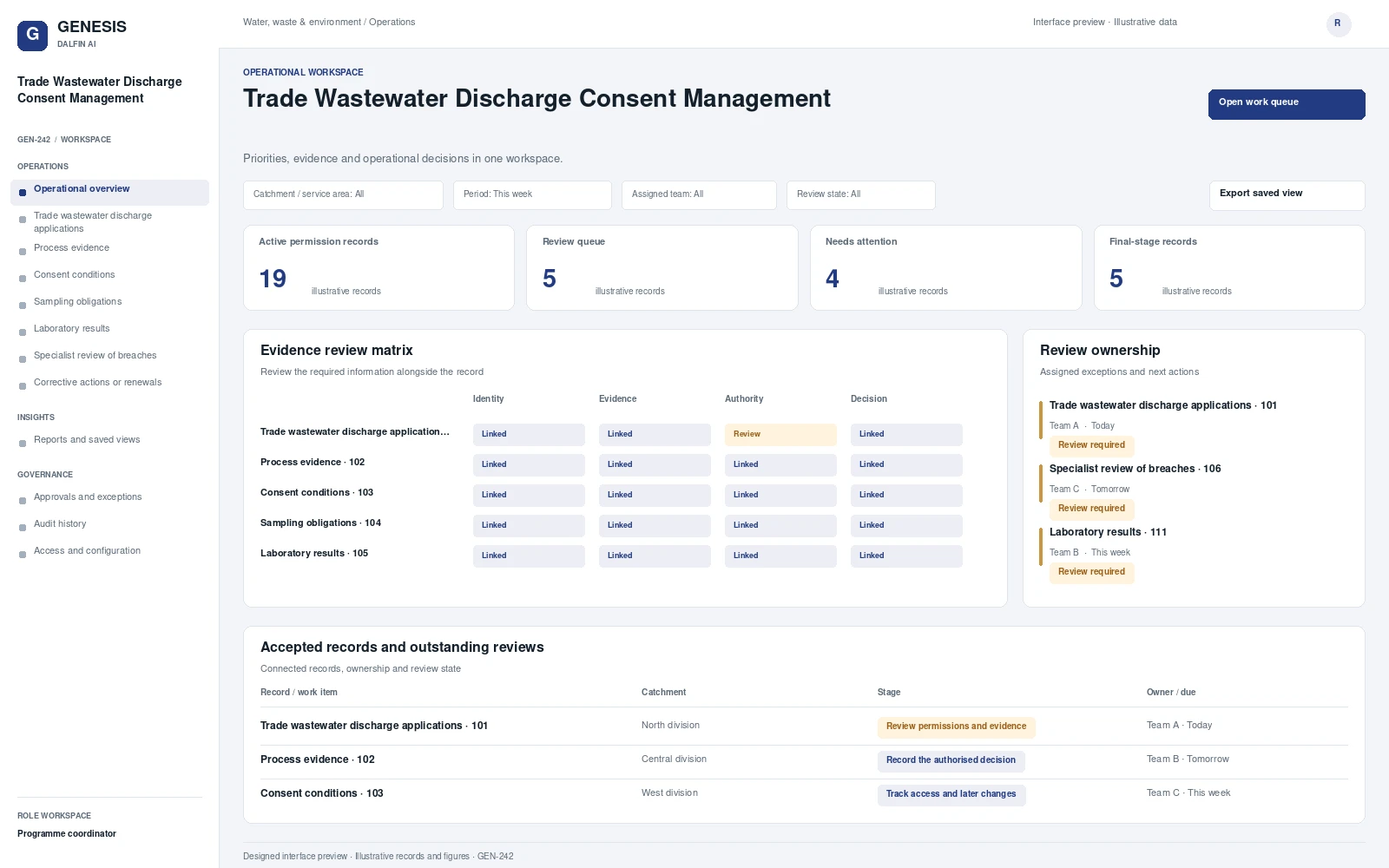 Interface preview
Administers trade wastewater discharge applications, supporting process evidence and authorised consent conditions.
Explore system →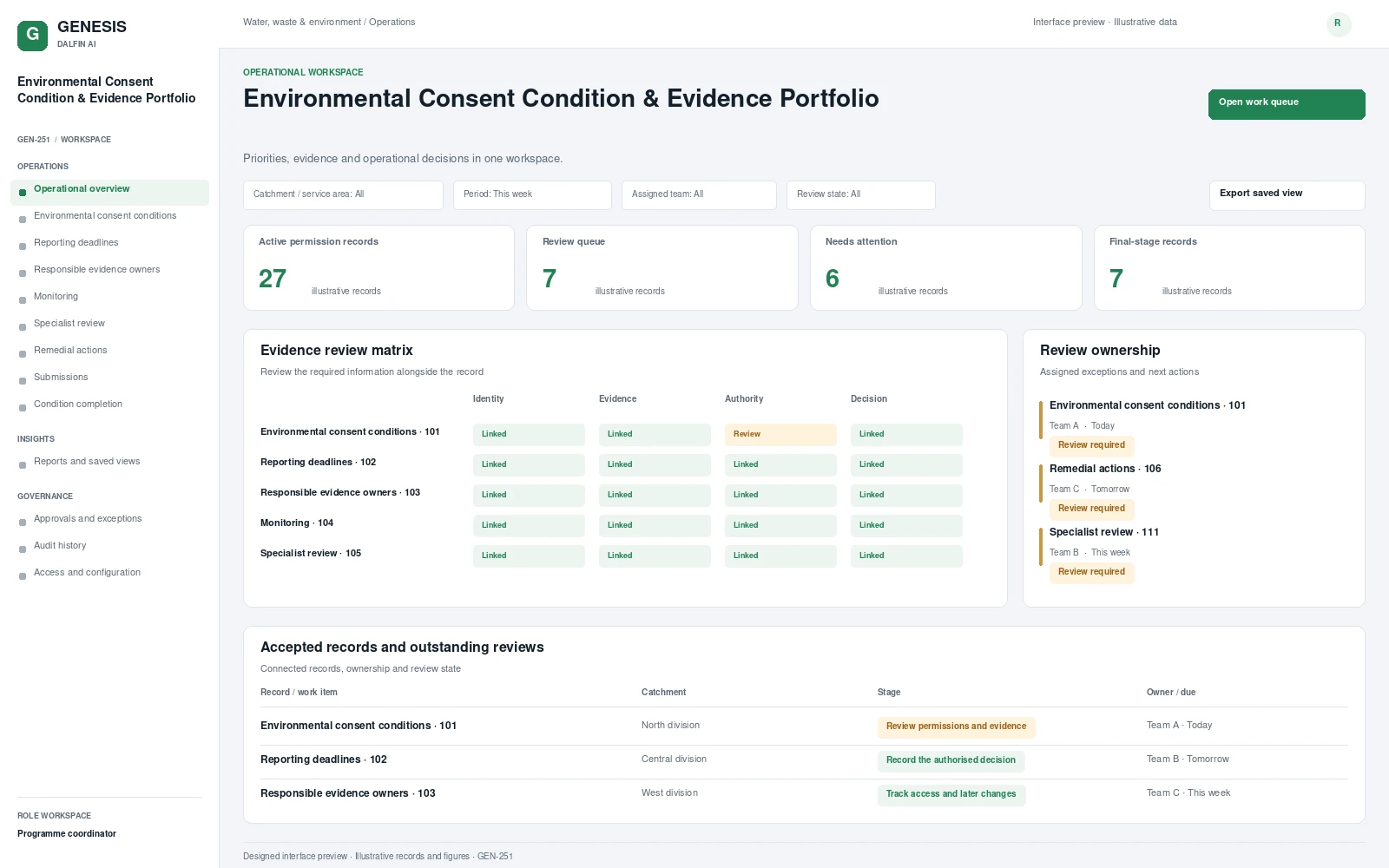 Interface preview
Maintains environmental consent conditions, reporting deadlines and responsible evidence owners.
Explore system →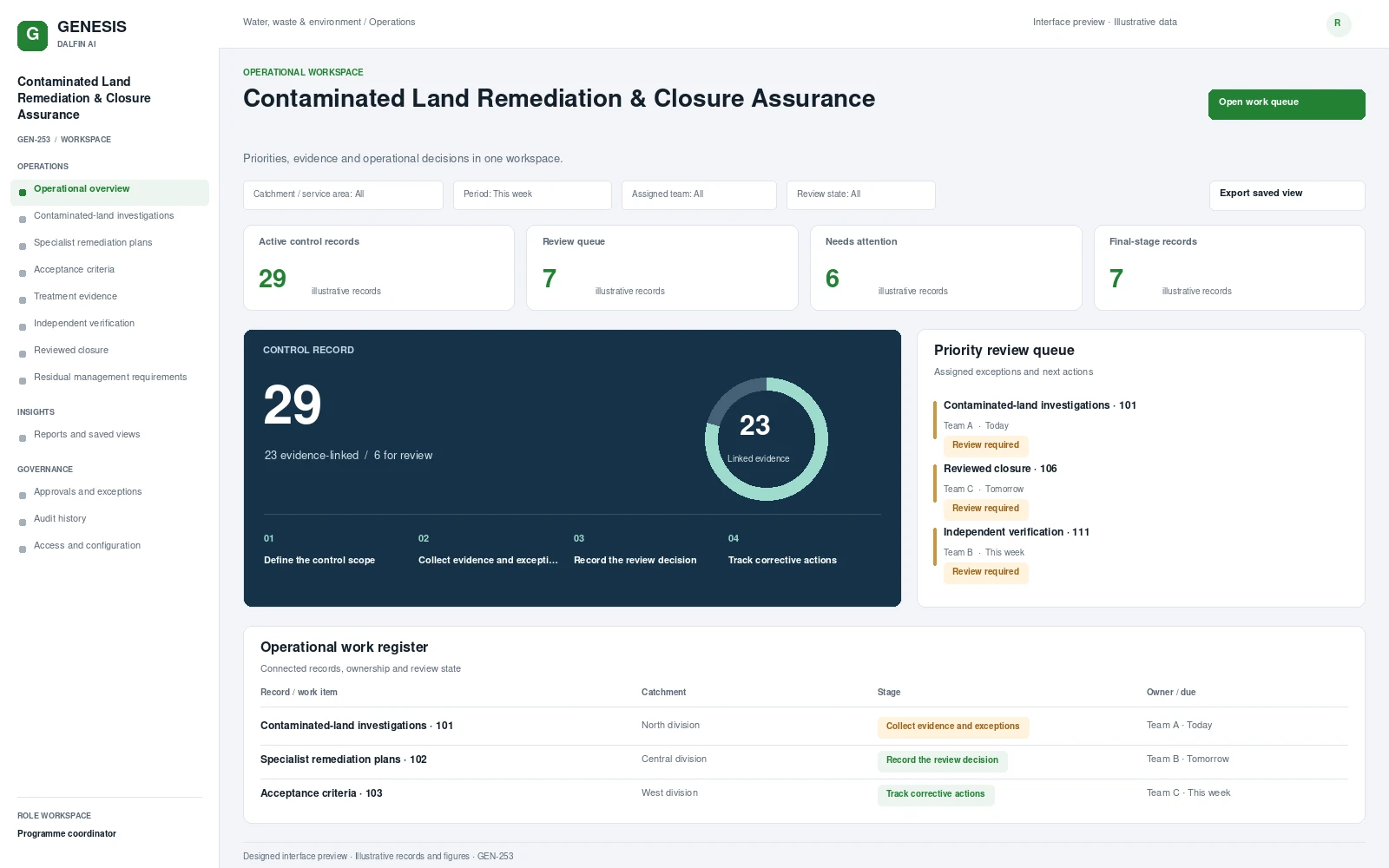 Interface preview
Coordinates contaminated-land investigations, specialist remediation plans and approved acceptance criteria.
Explore system →