
Operational views
Review work, evidence, exceptions and authorised decisions within a defined operating scope.
Banking & financial services
Coordinate identity and ownership evidence, approved verification, risk-based review, relationship approval and periodic refresh.
12 workspace menus · 5 role profiles · Connected records
Designed for customer onboarding directors
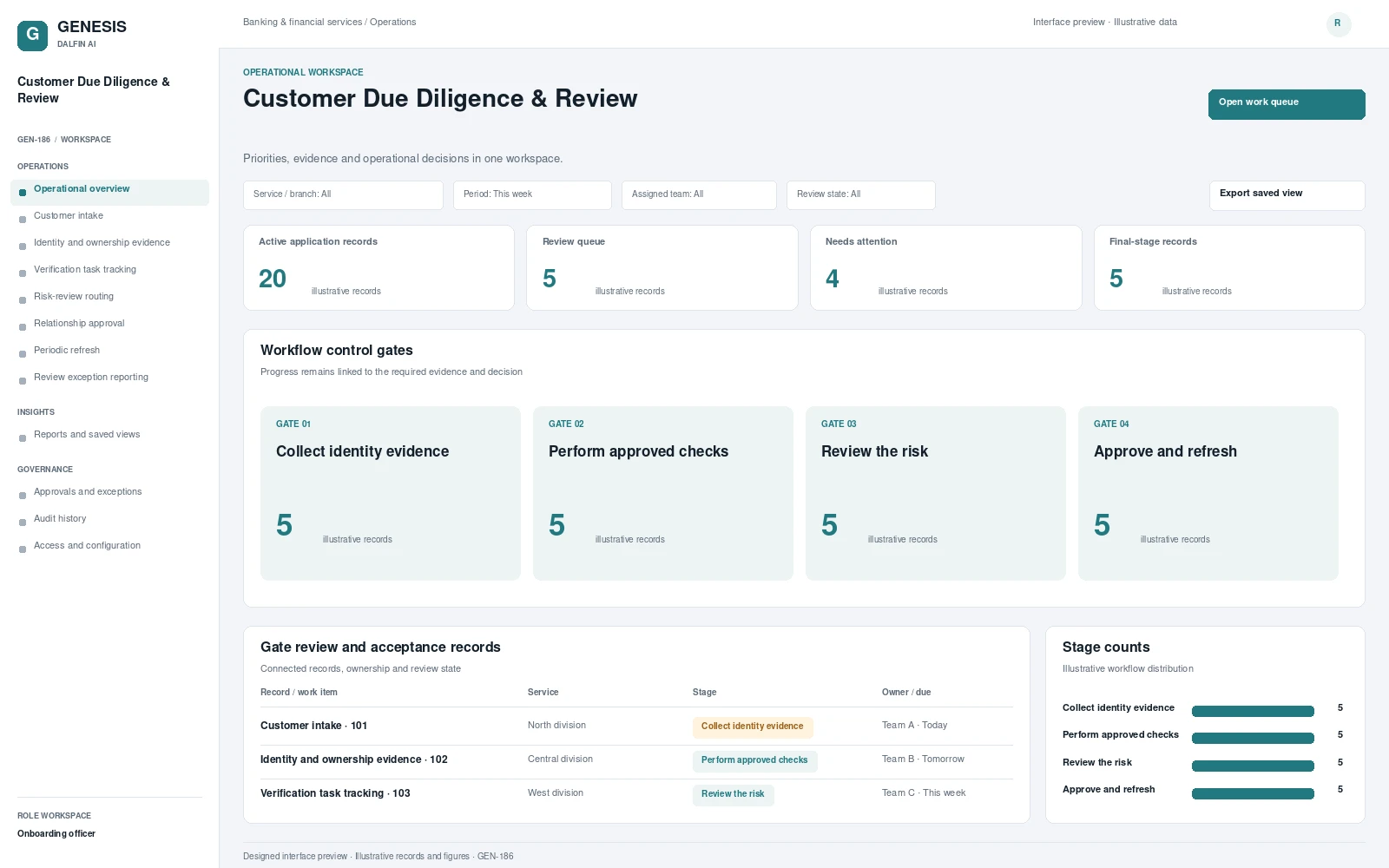
Operational workspace and record review. Select a screen to inspect it in full.
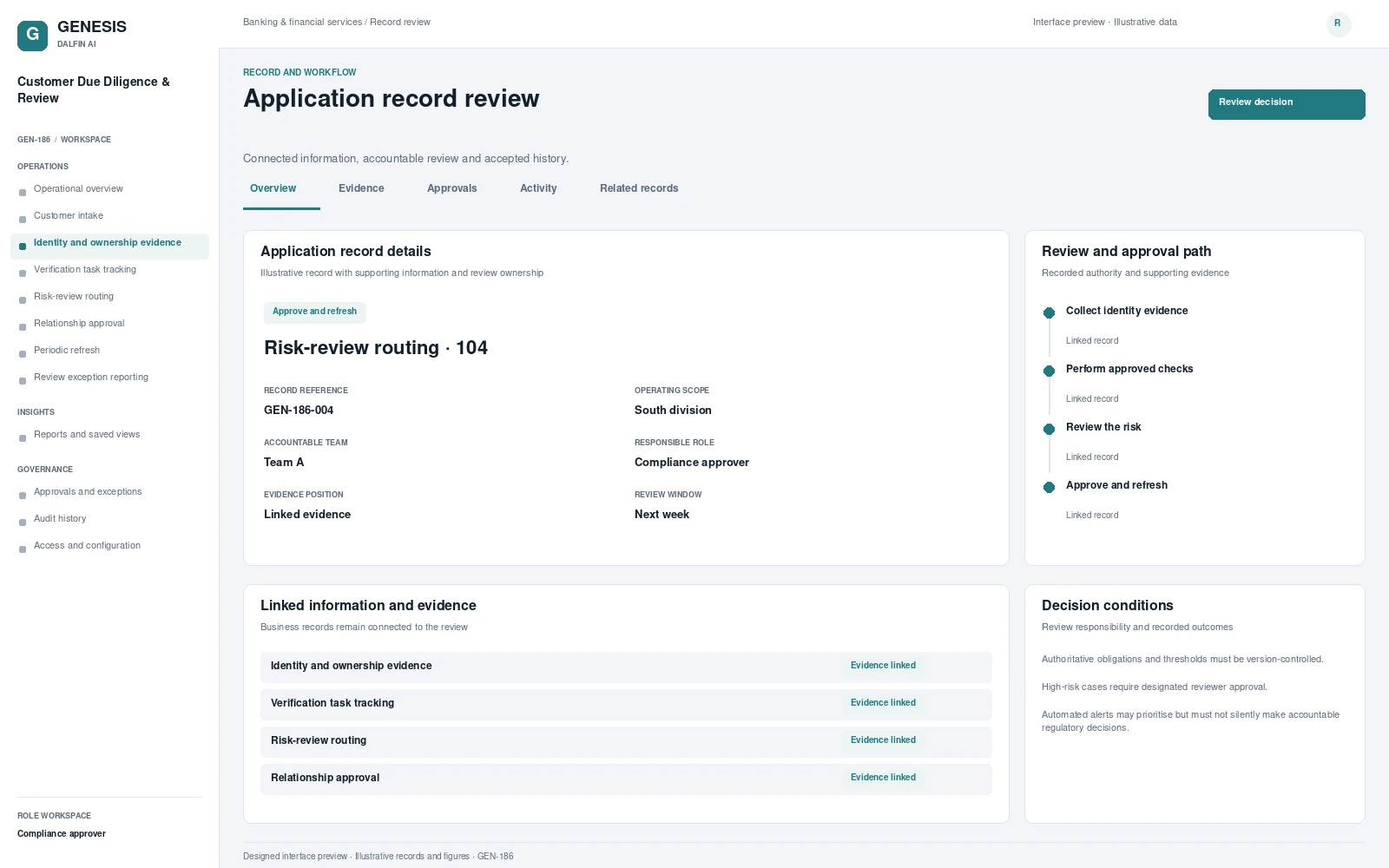
Review work, evidence, exceptions and authorised decisions within a defined operating scope.
Coordinate identity and ownership evidence, approved verification, risk-based review, relationship approval and periodic refresh. Onboarding teams need to understand both the customer evidence and the decision that permitted a relationship to begin. The system maintains that connection through verification, exception review and periodic refresh, giving compliance and business owners a common, accountable review record.
From intake to authorised completion, with evidence at each decision.
Collect customer identity and ownership evidence.
Perform approved verification checks.
Route risk-based human review.
Activate approved relationship and schedule refresh.
Permissions are configured and tested for the agreed responsibilities.
Interface scope, data mapping and testing are agreed for each engagement.
Support permitted evidence submission and review actions through controlled responsive views.
Access approved workflows through the Dalfin mobile app. Device tasks and permissions are confirmed for the deployment.
Extract document fields and organise evidence for reviewer confirmation. Approval and exception decisions remain accountable human actions.
AI extensions are scoped around the required data, business outcome and review controls.
Connect requirements, roles, records, workflows and interfaces through the agreed Genesis engineering process.
Review dependency impact and validation requirements. Context Memory supports governed changes and accepted application revisions.
Agree customer cloud or on-premises requirements, device access, implementation acceptance and ongoing engineering support.
An example operating scenario
A business customer submits incomplete ownership evidence. The reviewer requests clarification and an approved verification check creates an exception. An accountable compliance reviewer records the decision before relationship activation and schedules the next review.
Roles, approval authority, business rules, records and reporting are configured around your operating model. Scope definition connects the required business outcome to workflows, interfaces and acceptance criteria.
Operators, reviewers and authorised decision makers have defined responsibilities. Approval limits, exception handling and access permissions are agreed with your business owners and tested against the selected workflows.
Interface requirements cover your existing business systems, data ownership, mapping and authentication. Connection design and testing form part of the agreed implementation scope.
Start with a relevant business transaction, then review its approvals, an exception, role permissions and final records. Discuss the integrations, reporting and operating requirements that matter to your organisation.
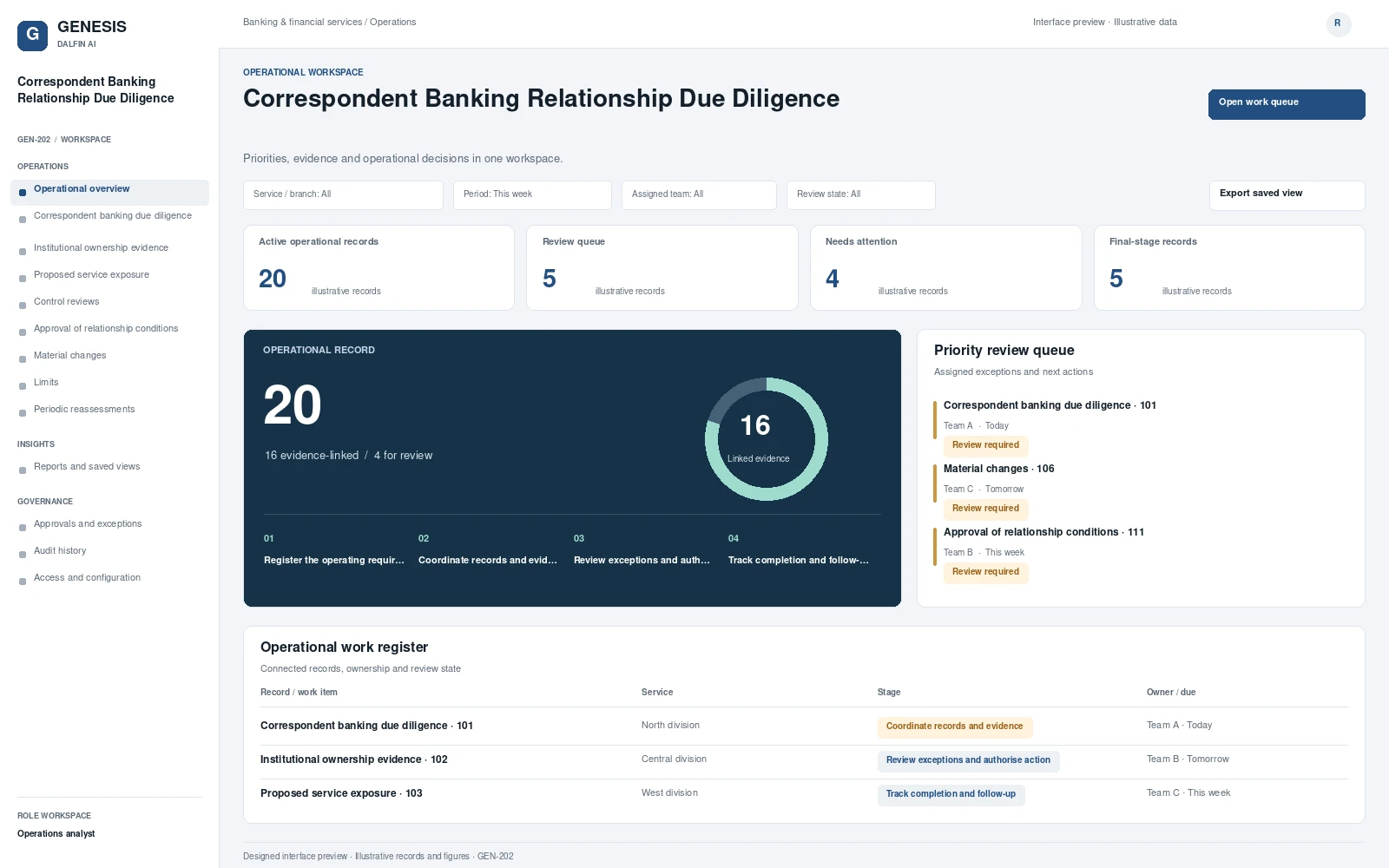 Interface preview
Organises correspondent banking due diligence, institutional ownership evidence and proposed service exposure.
Explore system →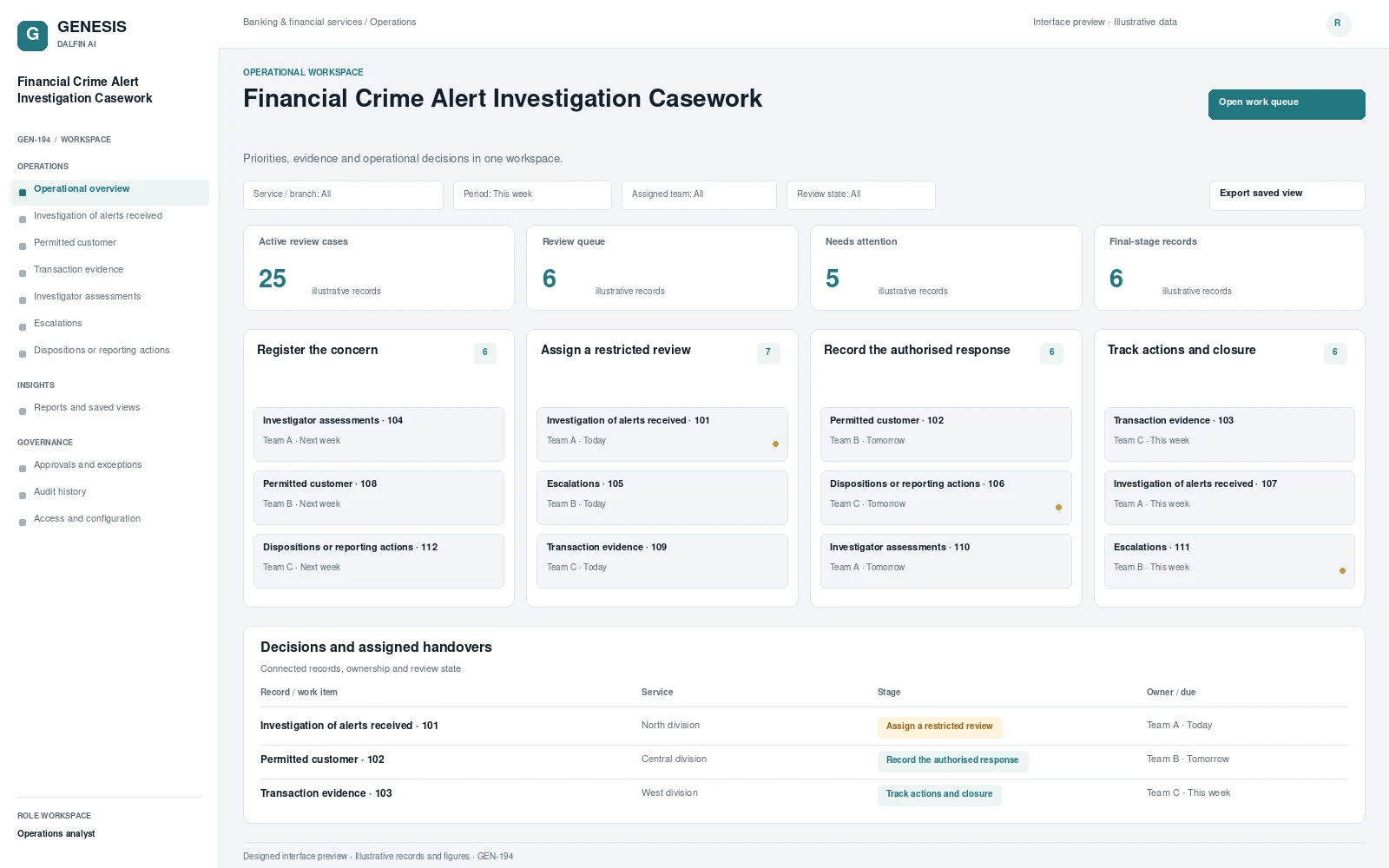 Interface preview
Coordinates investigation of alerts received from approved financial monitoring services.
Explore system →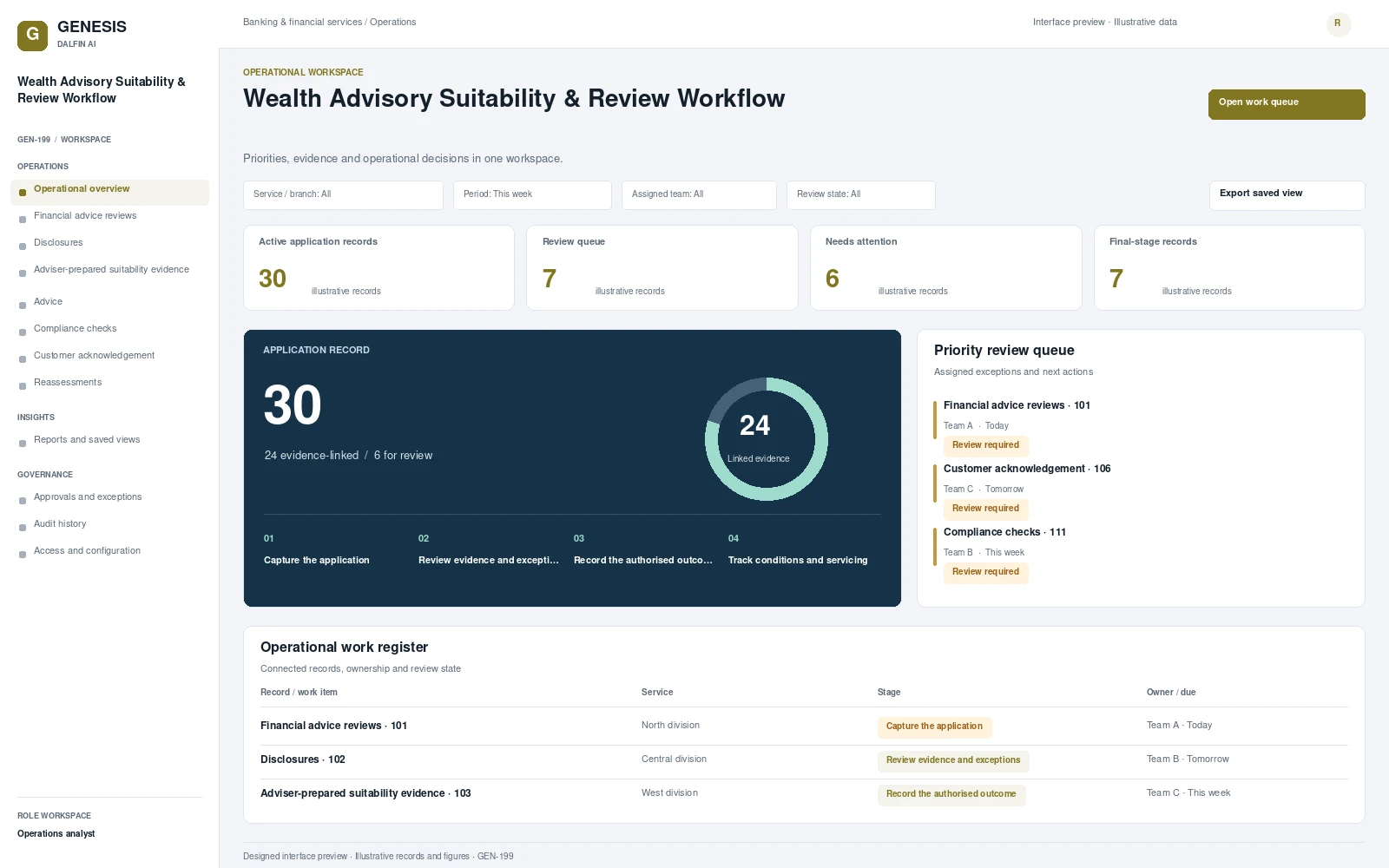 Interface preview
Coordinates financial advice reviews using customer objectives, disclosures and adviser-prepared suitability evidence.
Explore system →