
Operational views
Review work, evidence, exceptions and authorised decisions within a defined operating scope.
Real estate & facilities
Manage executed lease terms, options, incentives, obligations, rent reviews and approved receivable schedule changes.
12 workspace menus · 5 role profiles · Connected records
Designed for commercial property owners and lease administration teams
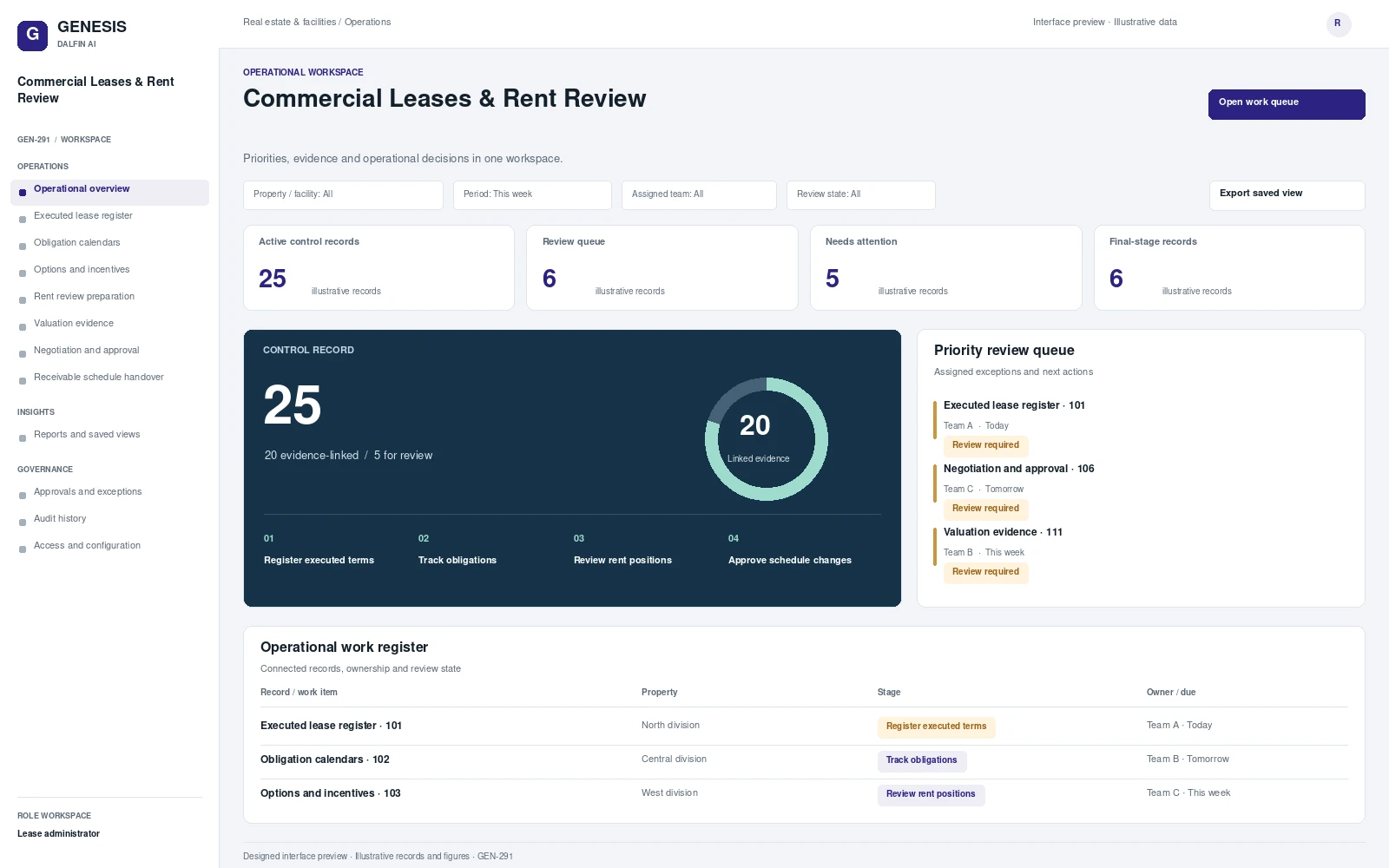
Operational workspace and record review. Select a screen to inspect it in full.
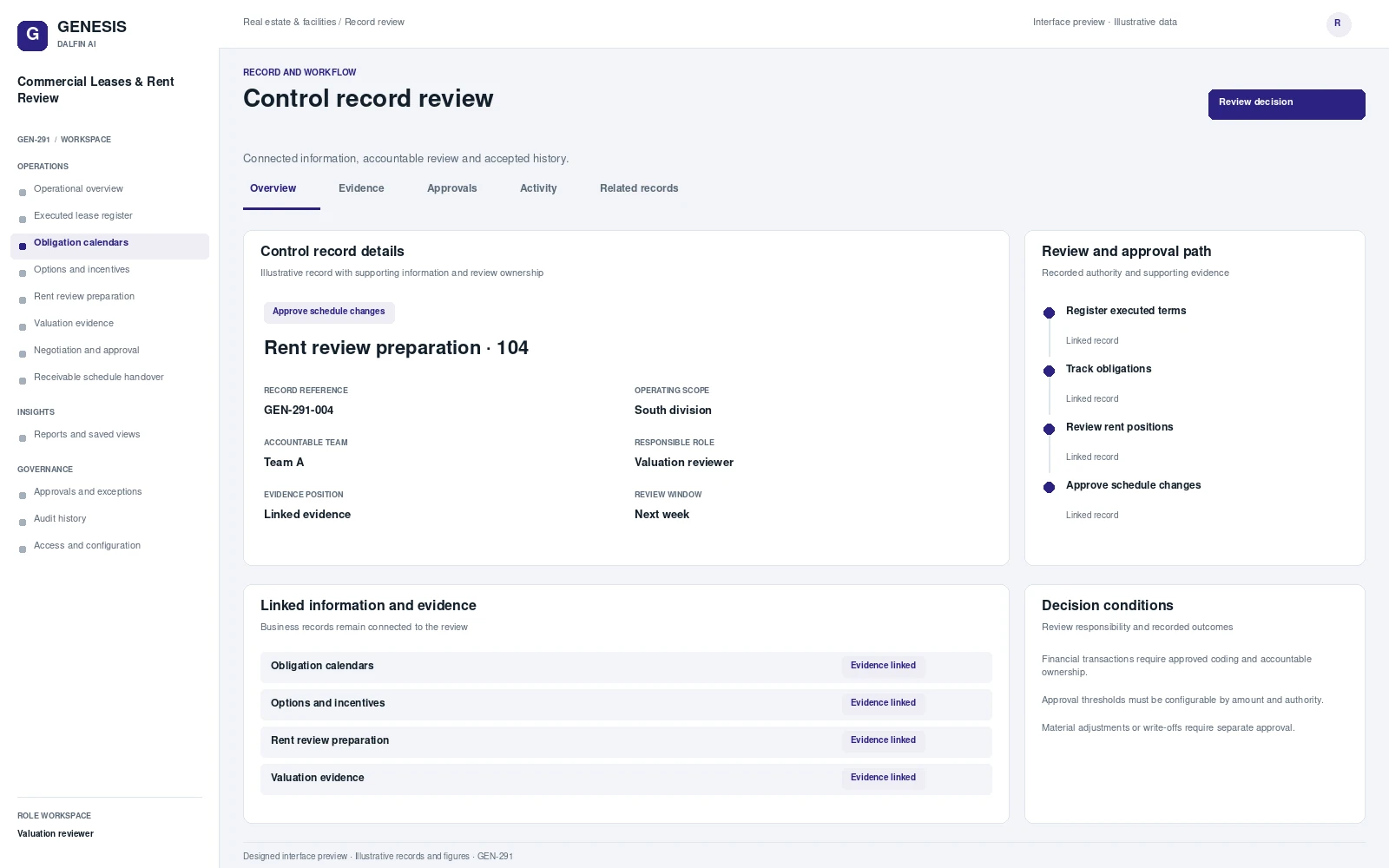
Review work, evidence, exceptions and authorised decisions within a defined operating scope.
Manage executed lease terms, options, incentives, obligations, rent reviews and approved receivable schedule changes. A lease carries obligations and review dates that can be missed when commercial terms remain in documents while billing runs elsewhere. The system turns reviewed terms into accountable tasks and retains the evidence behind a negotiated rent position or an approved amendment.
From intake to authorised completion, with evidence at each decision.
Register executed leases and rent review provisions.
Track options, incentives and landlord obligations.
Complete reviewed rent assessments and tenant negotiations.
Approve lease changes and update receivable schedules.
Permissions are configured and tested for the agreed responsibilities.
Interface scope, data mapping and testing are agreed for each engagement.
View key obligations and approve permitted lease actions away from the office.
Access approved workflows through the Dalfin mobile app. Device tasks and permissions are confirmed for the deployment.
Extract draft lease dates and obligations for administrator confirmation against the executed document.
AI extensions are scoped around the required data, business outcome and review controls.
Connect requirements, roles, records, workflows and interfaces through the agreed Genesis engineering process.
Review dependency impact and validation requirements. Context Memory supports governed changes and accepted application revisions.
Agree customer cloud or on-premises requirements, device access, implementation acceptance and ongoing engineering support.
An example operating scenario
A lease reaches a rent review date. The administrator identifies missing valuation evidence, obtains the reviewed position and records the tenant negotiation. The approved change updates the receivable schedule while preserving the prior terms.
Roles, approval authority, business rules, records and reporting are configured around your operating model. Scope definition connects the required business outcome to workflows, interfaces and acceptance criteria.
Operators, reviewers and authorised decision makers have defined responsibilities. Approval limits, exception handling and access permissions are agreed with your business owners and tested against the selected workflows.
Interface requirements cover your existing business systems, data ownership, mapping and authentication. Connection design and testing form part of the agreed implementation scope.
Start with a relevant business transaction, then review its approvals, an exception, role permissions and final records. Discuss the integrations, reporting and operating requirements that matter to your organisation.
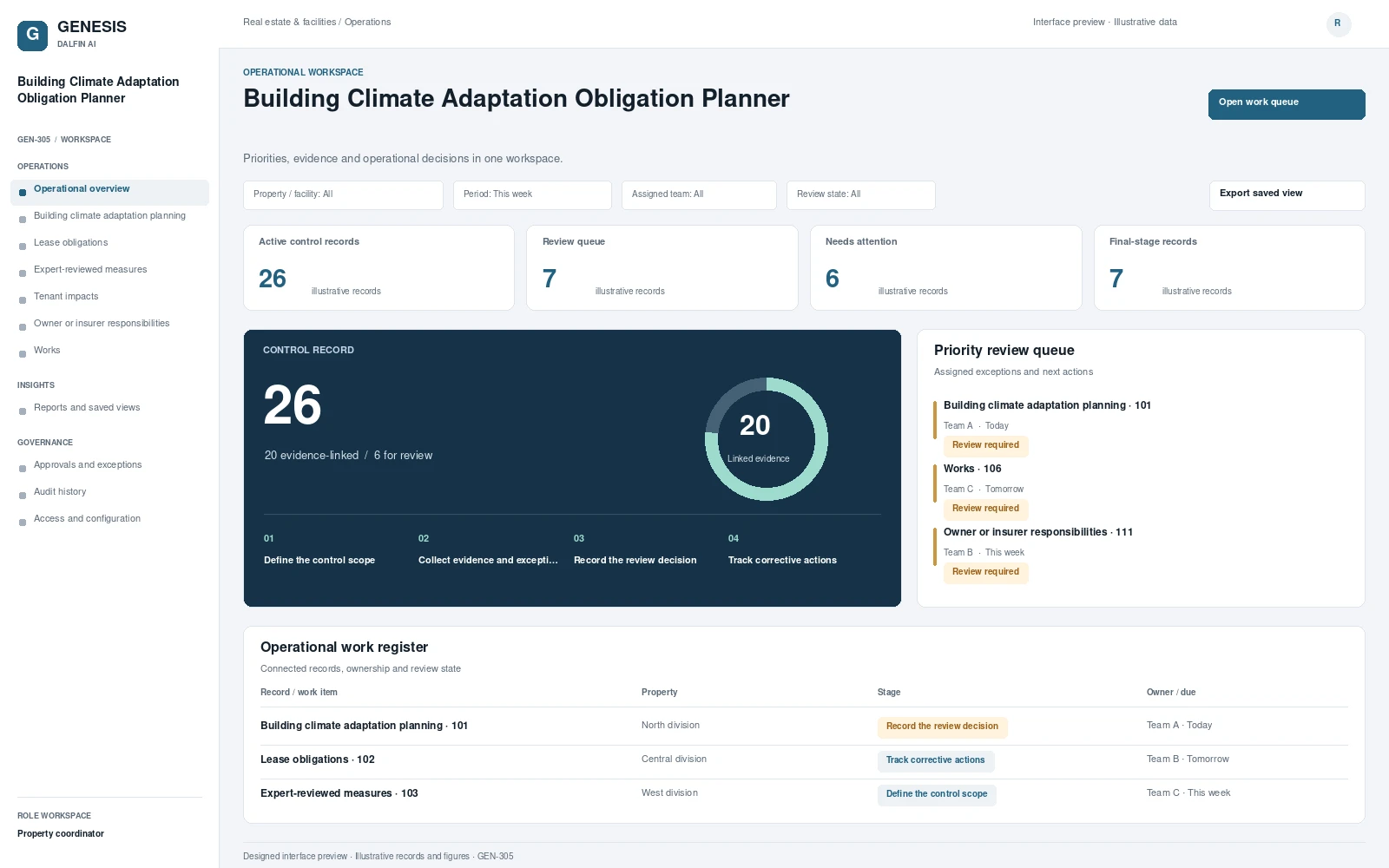 Interface preview
Supports building climate adaptation planning using verified exposure information and lease obligations.
Explore system →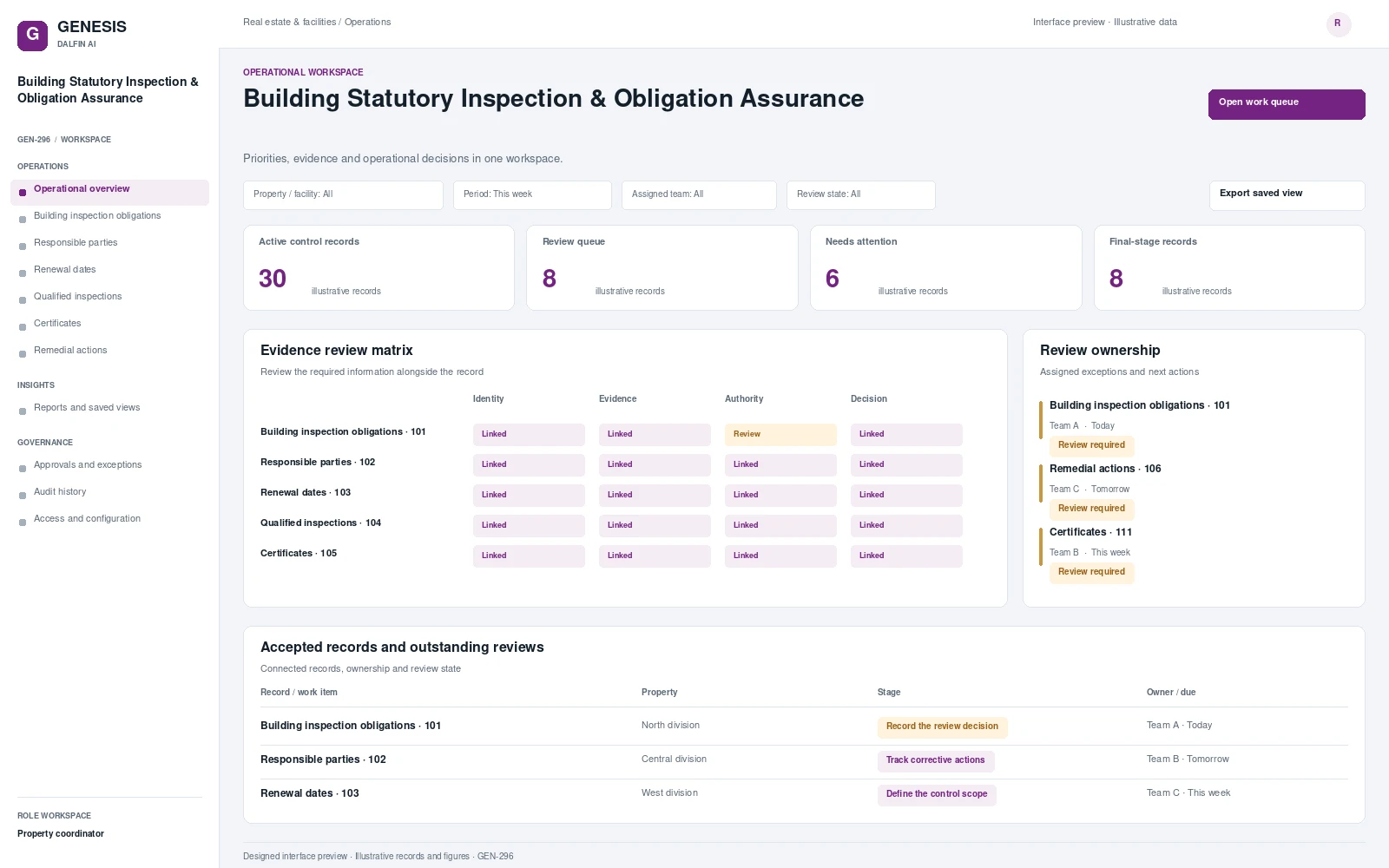 Interface preview
Tracks building inspection obligations, responsible parties and renewal dates.
Explore system →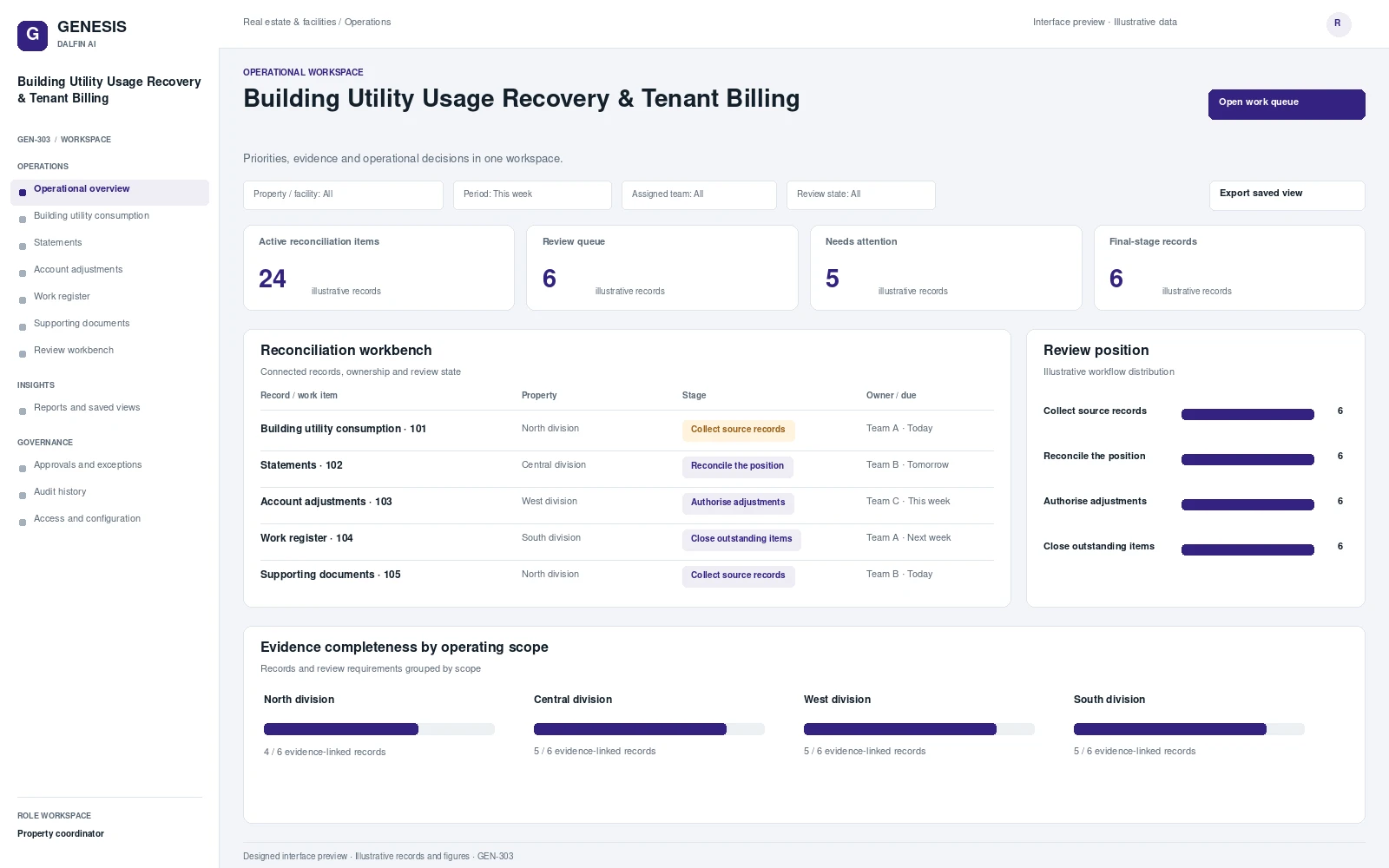 Interface preview
Reconciles building utility consumption with tenancy meters and approved recovery terms.
Explore system →